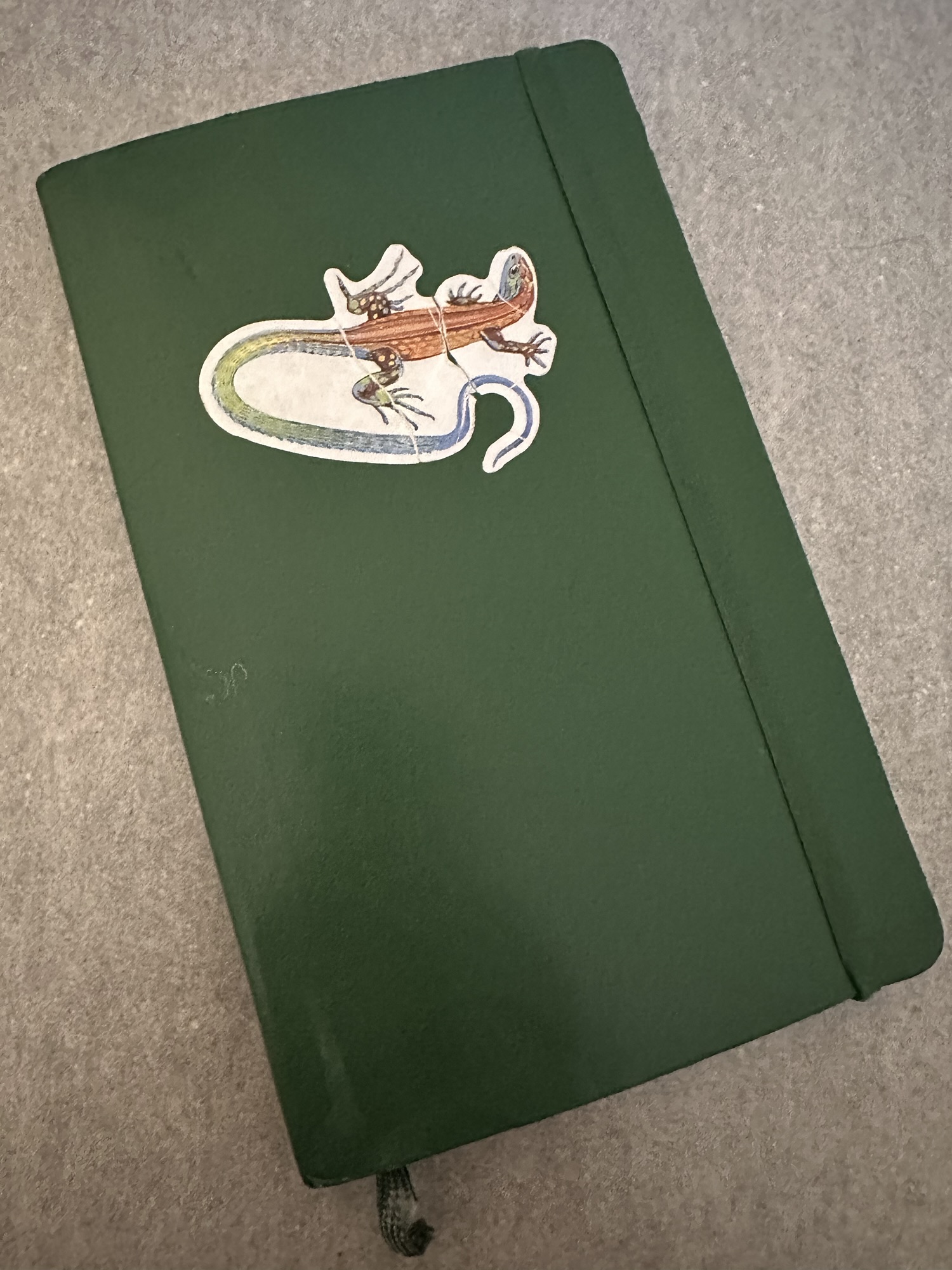
The beginning of the school year can be filled with many tedious get-to-know-you activities that often suck the life out of the very relationships we are trying to foster with our students. I know this fact and accept it as true, but knowing this truth does not stop me from wanting to know enough about my students to make sound educational decisions about how I will teach them. Much of the sharing that would have occurred publicly in the classroom—and caused the uncomfortability that others always remember about this time of the year—now occurs privately via a variety of reflective exercises that students share with me during the first few weeks of class. As I went through many of their replies, one particular answer surprised me by how often it emerged in their responses; my students now more than ever were saying that they engaged in the process of journaling or diary-keeping, and many of them even admitted to enjoying the act of recording their days or thoughts. I even talked with some of them about this tendency, because it was not a practice many of my former students were even familiar with. I myself have kept journals for much of my life, but I have done a supremely awful job these last several years when I remember being able to write every night during my youth. Even though I could easily blame my irregularity of entries on my lack of energy or time, now I wonder if the reason is something else. My students have inspired me to keep a daily journal once again, so I wanted to share some of the lessons I have learned from keeping a (near-) daily journal for the last two weeks once again. Even I did not know where my thoughts would take me with this post, just as I did not always know where my journal entries would take me. Please follow my ragged stream-of-consciousness musings below.
I knew that I needed to set rules in place to hold myself accountable. The first one I established was that I needed to make each entry on the day that I was discussing; I worried that I might put off an entry or entries until I got overwhelmed by the days and weeks I had left out. This problem was the reason I fell so out-of-practice with my journaling in the first place, because it was so easy to allow life to get in the way. I could continue past midnight if I needed to keep writing, but I have so far kept my entries succinct and focused. The only other rule I felt I needed was that I can only discuss events as they relate to this day. The point of journaling is to record the importance of events as they occur in the singular context of each day, and doing so becomes more difficult as more events pile up due to the importance and understanding of those events shifting once time has passed. With these simple policies in place, I would be able to use my journaling as a diary that would also serve as a mirror within which I might see myself more clearly.

The first several days I felt like I had to race back home in order to write in my journal. Writing almost felt like a chore that needed to be done before I could allow myself to sleep, but as soon as I realized that train of thought, I changed it to communicate the honor that I was well enough to record my thoughts for another day of life. I looked at the opportunity as my chance to share my feelings about my day with someone else, an audience that I might never meet but one that I no less value for them being there. It is for this reason that I have kept all of my past journals—so someone might read them later and react. I know sometimes I have perused my past ramblings to see if I have changed, and even though I am sometimes too close to my subject to see those changes clearly, having these past thoughts to compare against current ones shows me that sometimes things do not change as much as I think they do. The world certainly does evolve in often mysterious ways, yet my reactions to a worsening world tell me that I, at least, have not worsened at quite the same rate.
With my daily entries came an unintended consequence: other thoughts bubbled forth more freely while I was writing and during other times of the day, too. The habit of knowing that I would need to write something about my day forced words and ideas to come to me while walking, sitting at my desk, and everywhere else not because I knew I needed something to write about but because I grew excited to share my story. That reason is reason enough for why most people become writers, because they grow excited to share stories that would otherwise remain only in our heads. Even in troubled times we can make an effort to share and read a variety of stories, if not as distractions, then as comforts to know that we are not alone in our struggles.
We love reading these stories with a similar fervor, so if you, my reader, have never engaged in the process of journaling, I must recommend trying to write the daily passings of your life for a few weeks to see if any pearls form out of the specks of sand we may be too busy to view under the normal pressures of life. Even if you feel like your life yields nothing worthy of recording, even the most quotidian of experiences can become interesting with time. I read my own “boring” exchanges from fifteen years ago and miss people, places, and products that I took for granted for far too long. In turn I go about my days ready to see the wonder in the most banal of occurrences, but the thought would never have occurred to me to do so unless I had recorded these fragments for introspection later. We never see the effects our writing may have in the decades that follow even the most innocent of writing events, and much of the power our words have resides in that uncertainty. Others might think our journaling removes much of that undefinition from our lives, but I almost see the act as magnifying it instead. We never know where writing will take us, even when we think we are sitting down to recount the events of the past day. Thinking back on a few other recent writing experiences, that unknowing of the destination is one of the reasons that I continue my writing practices every day across all of the types of writing that I do; another reason might be that I love to see my words accumulate until they create something larger than the whole. Journaling provides an opportunity to see the physical gathering of ideas across days, weeks, even years. My completed journals remain one of my most prized possessions, because I know that they are a promise to myself to return to myself at some later date. Otherwise, why would I care to write anything down at all?
While I will not beg you or force you to take up journaling in your own life, if you have ever considered sitting down with a journal at the end of a long day, it might mean that you have some thoughts you need to unload, or it might mean that that mental energy needs to go somewhere else instead of allowing it to stew in your brain. You do not need to share these words with anyone else. You do not even need to keep your pages if you do not want to read them again. I will always advocate for introspection and reflection, and I have found no better way to be honest with myself than to record my thoughts with the intention of returning. It helped me to see the inherent creative power in the soft, everyday events that seem to stifle our sense of direction. Maybe you can try setting out without a destination and see where your thoughts lead you by writing a few words down each day?

Leave a Reply